
case study
EveXite event operations command center case file.
EveXite needed one command center for event schedules, budgets, vendors, team tasks, live collaboration, and operational readiness.
← all case files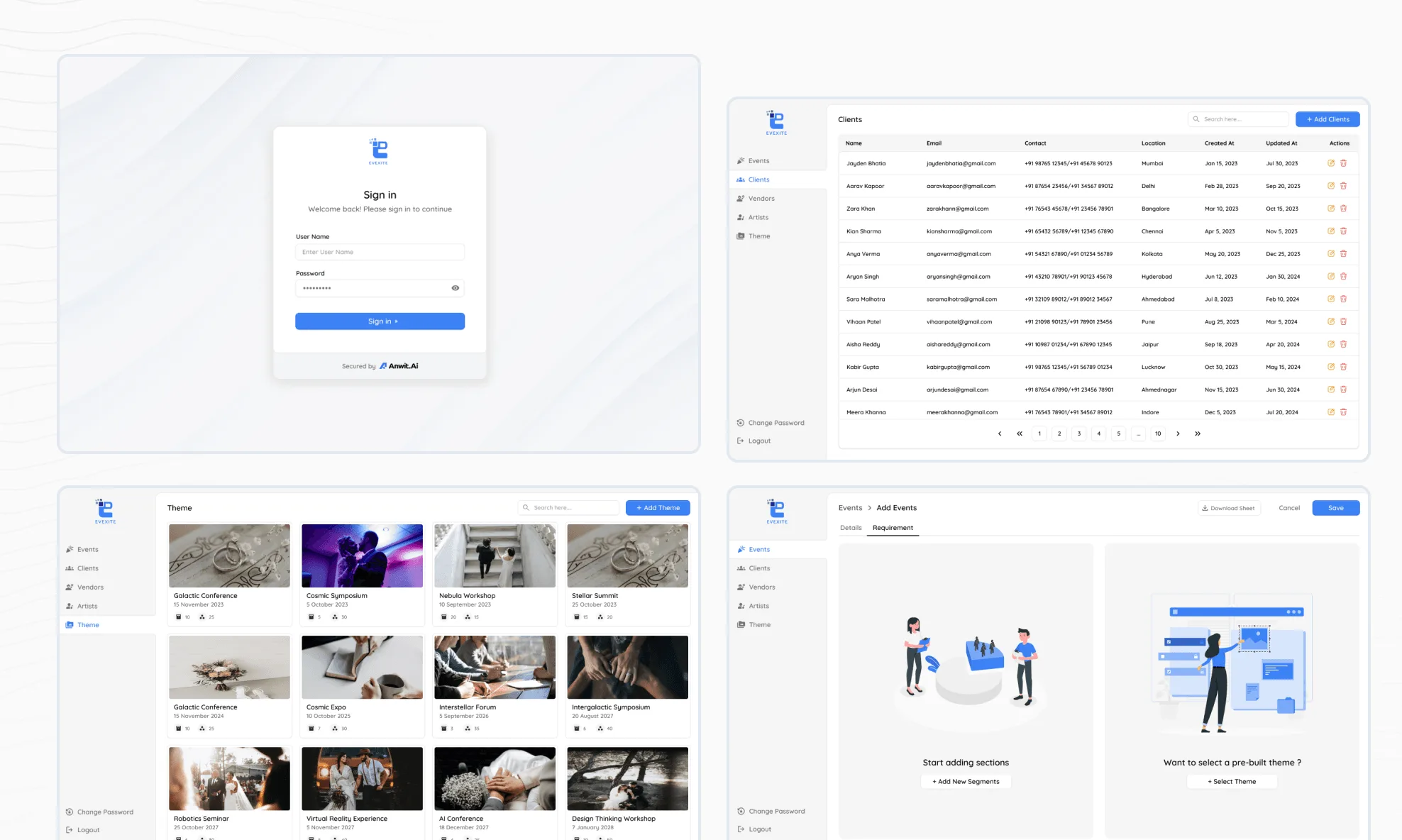
the build
What the build actually covered.
workflow decisions
-
Designed around planning, vendor coordination, task ownership, and readiness visibility.
-
Used guided forms and timeline structures to reduce setup complexity.
-
Kept dashboards focused on event health instead of decorative reporting.
engineering scope
-
Event planning workflow structure.
-
Vendor management views.
-
Collaboration and task patterns.
-
Real-time dashboard UX.
related services
-
Workflow systems
-
Product engineering
-
UX and product design
stack and patterns
-
SaaS product UX
-
Workflow systems
-
Dashboard UX
-
Collaboration patterns
product evidence
How event teams moved from coordination chaos to one command center.
The experience brought schedules, vendors, budgets, tasks, and readiness signals into one event operations product so teams could plan with less switching and more shared context.
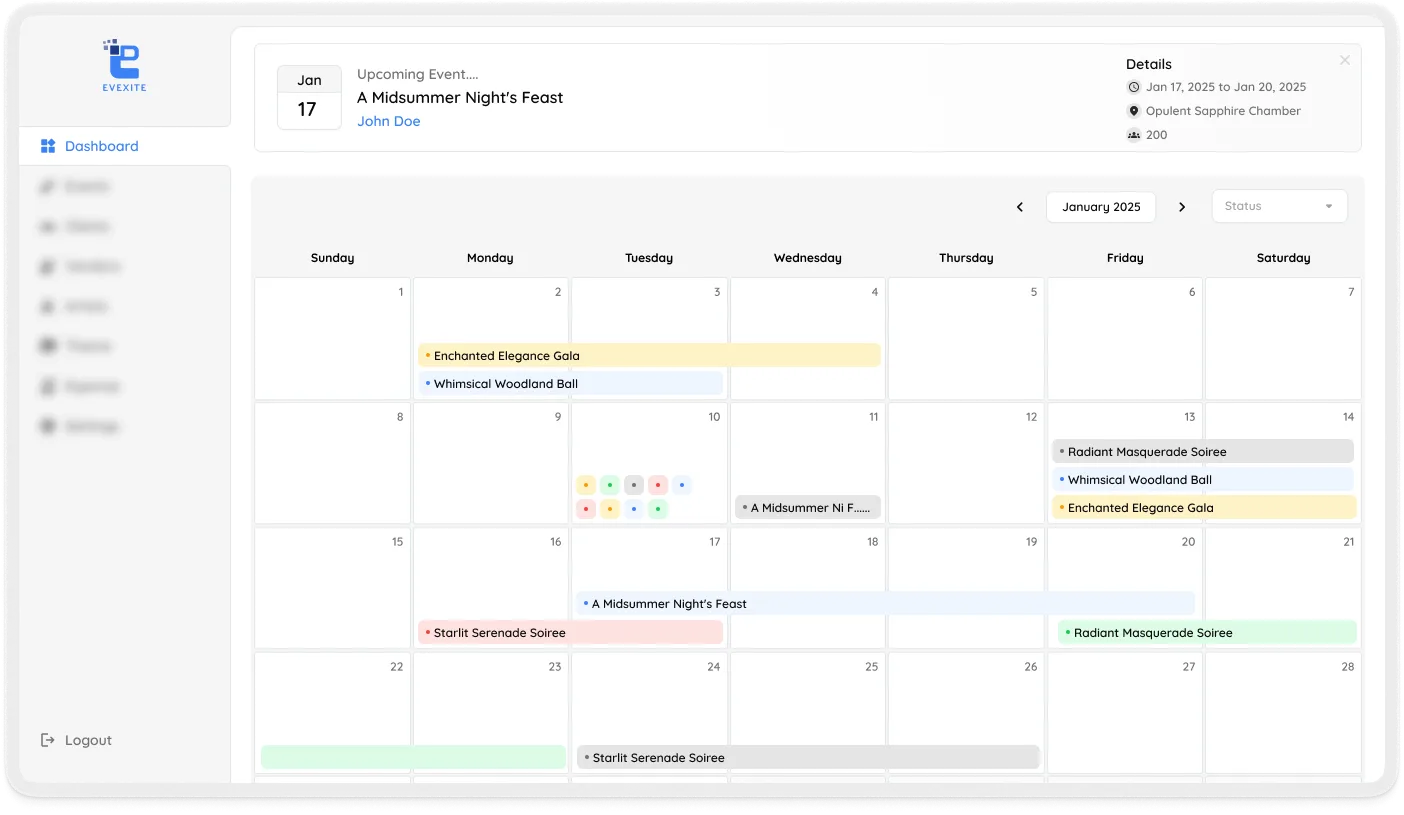
Real-time event dashboard.
Schedules, budgets, vendors, and team tasks live on one calm dashboard so leadership sees readiness at a glance.
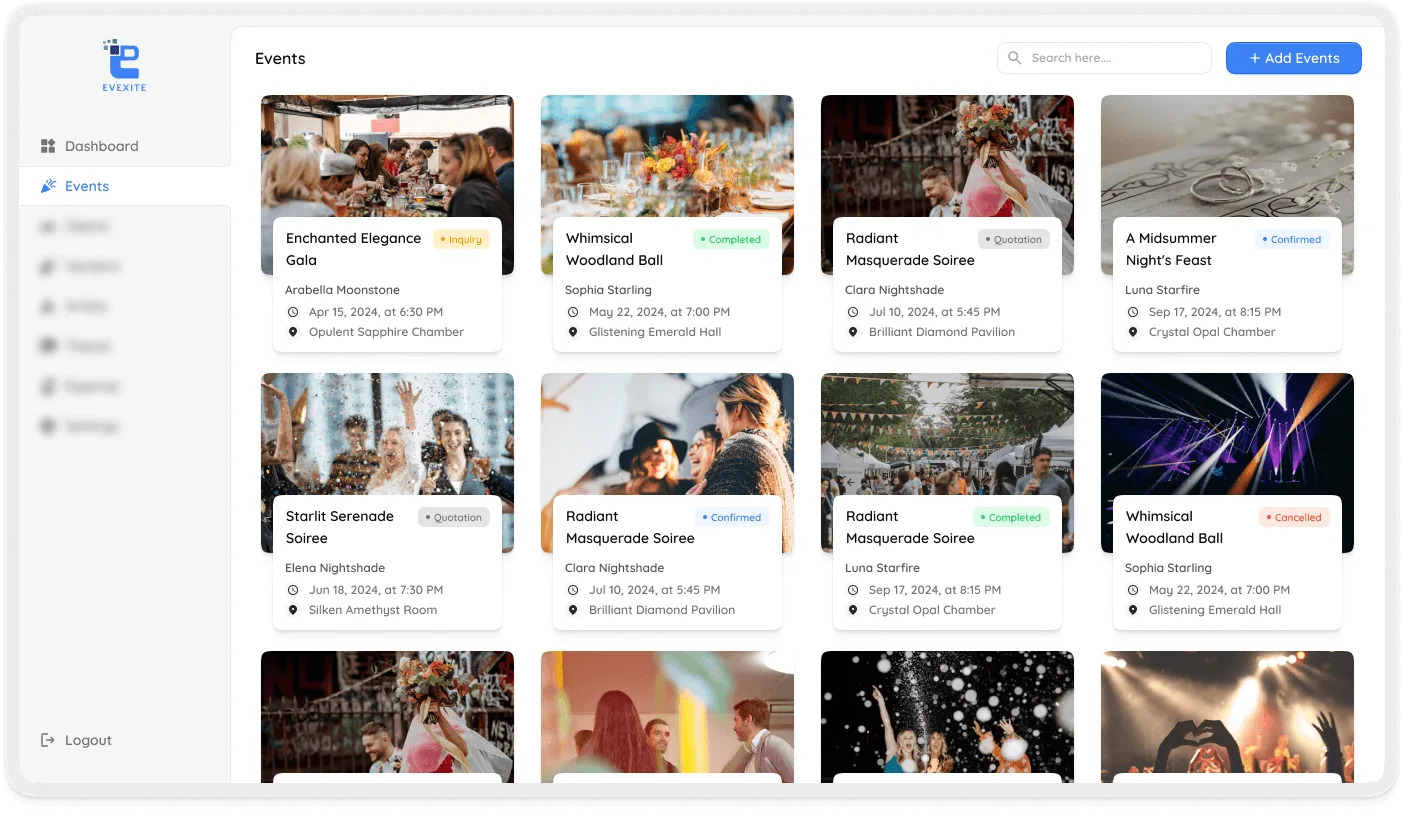
Interactive planning flows.
Guided forms and timeline builders cut event setup from days into minutes without sacrificing operational depth.
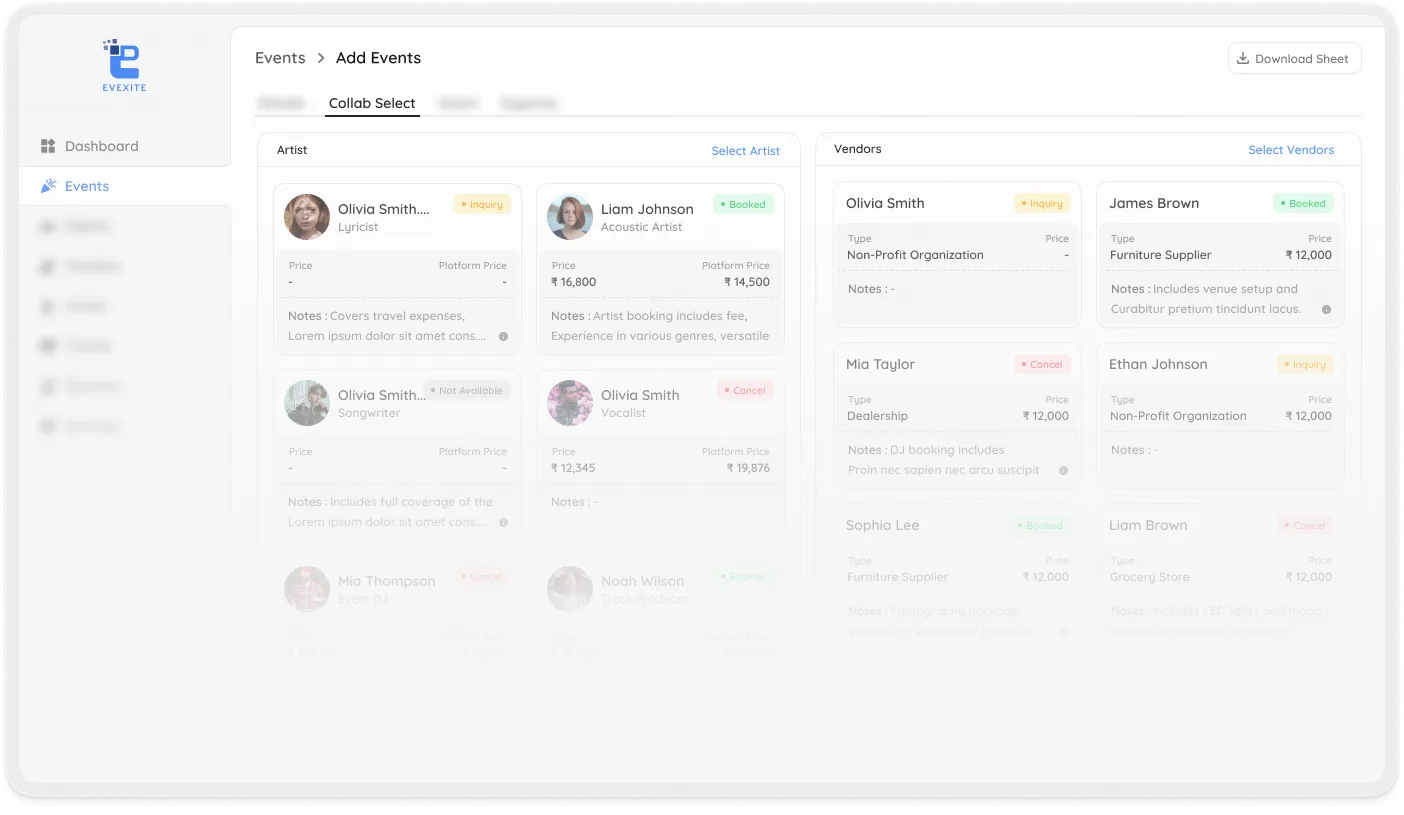
Intelligent vendor network.
Searchable vendor profiles with availability and performance history reduce coordination time and decision risk.
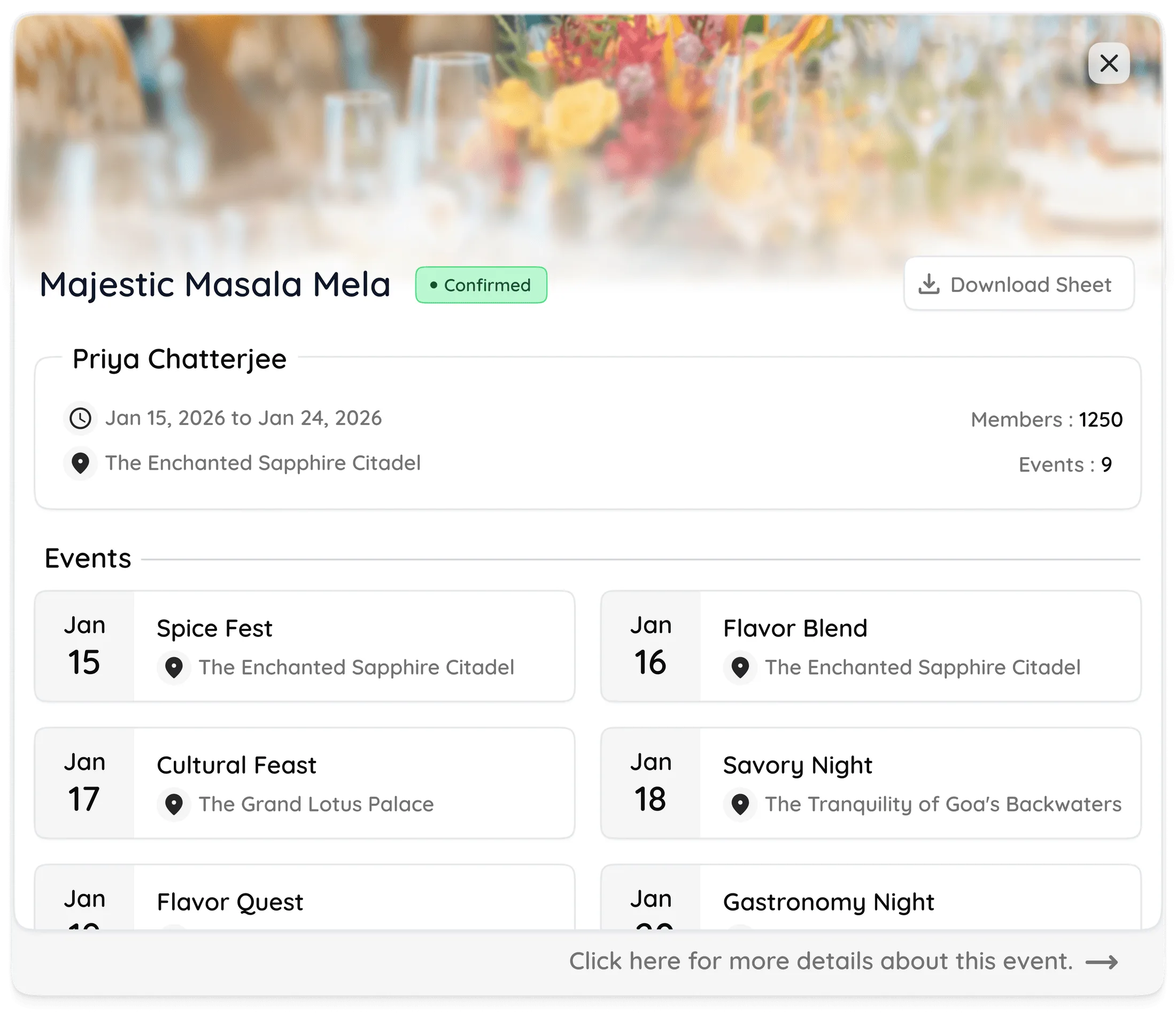
Live team collaboration.
Tagging, contextual notifications, and live updates keep on-site and remote teams aligned through execution.